Acta Computationis Biologicae
Vol. I · Fascicle 1 · 14 August 2026 · Lethbridge
Expanding the biological domain: a titration of intelligence into a life-science question
Sweta Rai1,*
1Department of Biological Sciences, University of Lethbridge
Lethbridge, Alberta, Canada
Supervisor: Dr. Igor Kovalchuk
*Correspondence: sweta.rai@uleth.ca
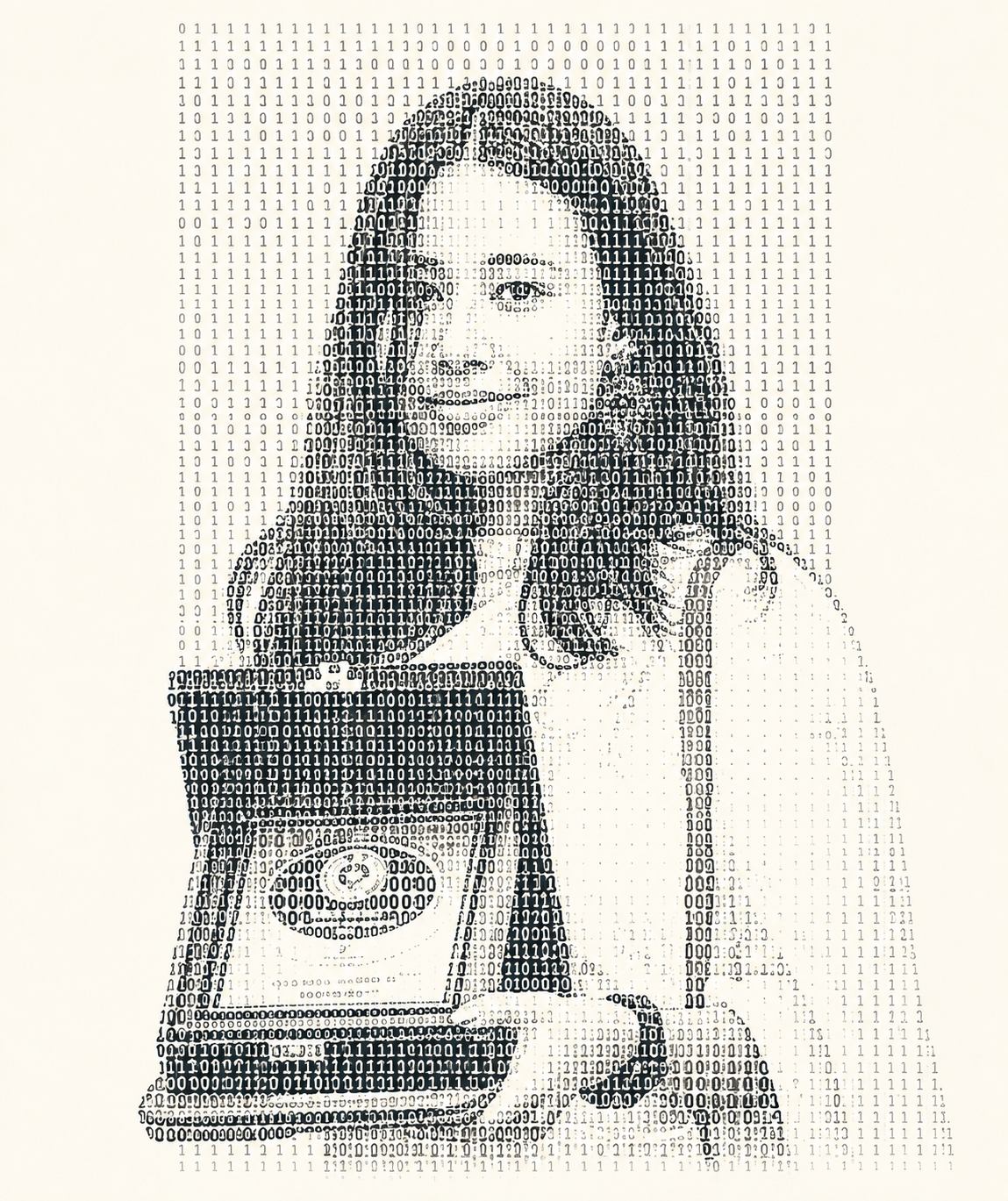
Plate I
Abstract
When I learned AI I stayed in biology. I added a titrant. The flask already held a life-science question. How does rheumatoid arthritis write itself into expression and methylation. Computation entered drop by drop. First docking scripts. Then R pipelines for differential expression. Then classifiers that rank biomarkers. I am a PhD candidate in Biological Sciences (Bioinformatics) at the University of Lethbridge. I work with Dr. Igor Kovalchuk on multi-omics biomarker discovery in rheumatoid arthritis. This article is the public record of that titration.
Keywords. Multi-omics integration · Transcriptomics · Epigenomics and methylomics · Biomarker discovery · Systems biology · AI and machine learning for biomedical research
1. Introduction
I began as a biologist. Dibrugarh University trained me in biology, biotechnology, and bioinformatics. The university ranked me third at the bachelor convocation in 2019. The MSc in Applied Genetics and Bioinformatics at Bangalore University ended with the Gold Medal and first rank. The thesis screened roughly three thousand phytochemicals against rheumatoid arthritis targets. That was the first time I added computation to a biological question I already cared about.
I am a PhD candidate in Biological Sciences at the University of Lethbridge. I work with Dr. Igor Kovalchuk on multi-omics data analysis for biomarker discovery in rheumatoid arthritis. I build reproducible R and Python pipelines that turn public genomic archives into clinically meaningful signal from transcriptomics, methylomics, and machine learning.
Alongside the PhD I mentor independent-study and research-assistant students. I help deliver graduate and undergraduate courses in the Kovalchuk lab. I also work on applied data science and AI-evaluation projects in industry. I want to lead a research program across transcriptomics, epigenomics, systems biology, and AI-enabled biomedical discovery.
A flask on the right titrates the career. Figure 2 is a PA radiograph of the left hand. Osteoarthritis on the left film. Rheumatoid arthritis on the right. The PhD is aimed at the second film.
2. A formal model of the career
Let be the domain of the question at time . The career is an integral.
The lower limit is the bachelor year. The integrand is the method the question required next. Docking in 2021. and in the PhD. Then supervised learners for biomarker ranking. At the equivalence point , intelligence enters. The flask stays full.
Equation (2) is a statement of identity. I still read GEO series. I still argue about batch effect. I still write R. The new term changes the colour of the solution. The same disease question can now be asked with models that were not available at the bench alone.
3. Materials and methods
The method is the path that filled the flask. Four steps. Each one is still in the reagent list.
B.Sc. Life science at Dibrugarh University. Biology, biotechnology, and bioinformatics sat in the same degree. That year fixed the question as a biological one. I still start from a tissue, from a disease, from a molecule that might matter. The university ranked me third at convocation in 2019.
M.Sc. Applied genetics and bioinformatics at Bangalore University. I screened roughly three thousand phytochemicals against rheumatoid arthritis targets. Docking was the first computational method I trusted. It changed what a life-science question could hold. The Gold Medal and first rank sit on that rise.
Clinic. Medical coding at Omega Healthcare taught a second disease from the record side. I trained on nearly three hundred non-small cell lung cancer charts in 2021. In 2022 I coded about fifty cases a week. ICD-10 made the language of oncology precise. I learned how a diagnosis is written before I asked a genome about it.
Ph.D. The doctorate at Lethbridge is where the method is taught as well as used. I supervise independent-study students. I mentor research assistants in the Kovalchuk lab. I help design experiments. I teach R and machine learning on real questions. The same reagents I use on RA transcriptomes I hand to undergraduates and graduates.
The PhD protocol, written as equations. For gene ,
with significance from empirical Bayes moderation (, ) and false-discovery control
Transcriptomic and methylomic layers are joined by horizontal, vertical, and gene-level integration. Co-expression uses WGCNA. Causal follow-up uses Mendelian randomization (TwoSampleMR). Feature selection (Boruta, LASSO) precedes classification (logistic regression, random forest, XGBoost). The full inventory is Table S4 in the methods supplement.
4. Results
The flagship academic result is the Gold Medal. The flagship scientific result in print is the 2024 review on -cell plasticity. The flagship programme now running is the RA multi-omics pipeline. Table 1 records honours. The bibliography records manuscripts.
Table 1. Selected honours and funding
| Year | Recognition | Issuer |
|---|---|---|
| 2022 | MSc Gold Medal & University First Rankflagship | Vice Chancellor, Bangalore University |
| 2024 - Present | MITACS Scholarship - Accelerate / Research Training Award | MITACS, with Dr. Igor Kovalchuk (University of Lethbridge) |
| 2019 | University Third Rank Holder | Bachelor's Degree Convocation |
| 2023 | Certified Data Scientist | Professional Certification |
| 2024 - Present | PhD Scholarship / Graduate Research Funding | University of Lethbridge, Biological Sciences |
Table 1. Awarded the Gold Medal and first-rank distinction for the Master of Science in Applied Genetics and Bioinformatics cohort, graduating with Grade A+ and a CGPA of 8.57/10. MITACS support (2024 to present) funds the doctoral work under Dr. Igor Kovalchuk.
The published review (2024) appears as reference [1]. DOI 10.3390/cimb46070453. A complete list, including manuscripts in preparation, is Supplement S6.
5. Discussion
I am seeking postdoctoral positions in computational biology, bioinformatics, and translational genomics.
I want a laboratory, or a group inside one, where a biological question can pick up a model without putting down the pipette. The academic CV and the ATS résumé leave as PDFs in Section 6. Letters may be addressed to the corresponding author, or written through Supplement S7.
Acknowledgements. Dr. Igor Kovalchuk for supervision of the doctoral work. MITACS for research training support. Dibrugarh University for the bachelor year. Bangalore University for the Gold Medal and the years that filled the flask before Canada.
6. Offprints
Journals used to mail paper reprints. This website is the press. Two files leave with the article. The academic CV is the long form. Search committees read it. The ATS résumé is the short form. A parser reads it. Both carry the same facts. Take them from here.
Issued from this website
Table 2. Files issued with this article. Download is from the site itself. The long form is SWETA_RAI_phd.pdf. The short form is Sweta_Resume.pdf.
References
- Ghasemi Gojani, E., Rai, S., Norouzkhani, F., Shujat, S., Wang, B., Li, D., Kovalchuk, O., Kovalchuk, I. (2024). Targeting β-cell plasticity: A promising approach for diabetes treatment. Current Issues in Molecular Biology, 46(7), 7621-7667. doi:10.3390/cimb46070453.
- Rai, S. (2022). Investigation of anti-arthritis compounds from Cinnamomum zeylanicum through in-silico methods. Master's Thesis, Department of Applied Genetics, Bangalore University.
Supplementary information
The article states the argument. The supplements hold the laboratory book. Vita. Dated entries. Reagent tables. Numbered experiments. The letterhead.